
Blogged About It

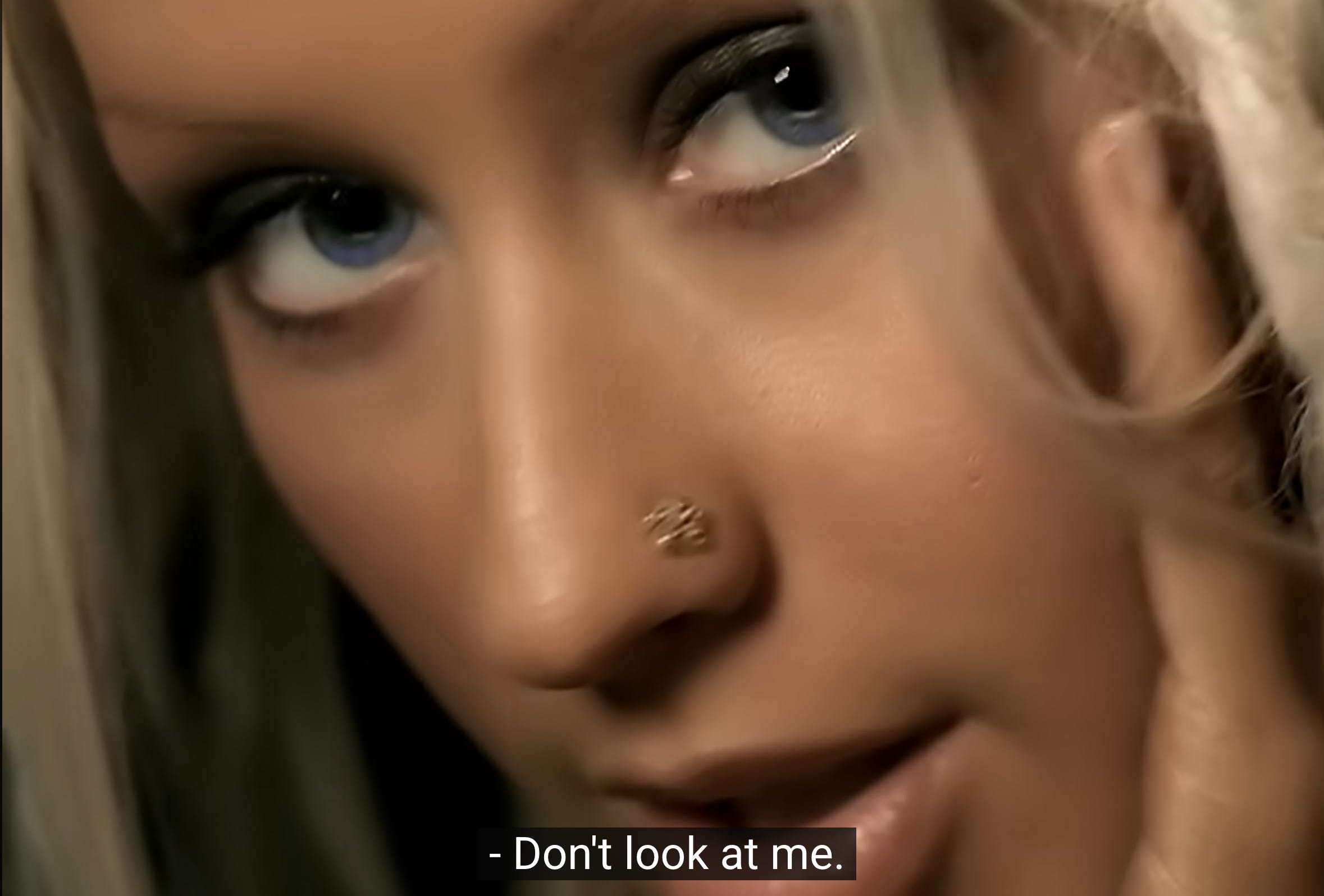
The last time I wrote anything about Transgender Day of Visibility was in 2021 with a satirical blog post for The Guardian US, which asked readers to celebrate TDOV by looking at me, specifically. (“It won’t improve trans people’s material conditions, but it’ll definitely make me feel great.”) Rereading it now, five years later, it feels of a different time because it honestly kind of was—like, more than just five years ago, I mean. Its underlying joke was that of a stock trans influencer caricature, whose whole narcissistic, therapy-spoken, corporate-approved point of view, cherry-picked and elevated by the mainstream media powers that be, was completely out of touch with how the average trans person lived. But these days, trans influencers…what are those???? Whither, etc.????1 The only trans influencers I see anymore are girls doing promo for surgeons and aestheticians, presumably in exchange for free work, which fab. Who cares. We all have our strategies. You’ll never catch me Father Karining on here.
But yeah, back to that old Guardian blog: I think nothing sums up the sudden paradigm shift like something the gorgeous and talented Morgan M Page wrote on Bluesky yesterday. “Been out as trans for a quarter of a century,” she began, “and in that time watched as we went from degraded talk show fodder to corporate visibility grifters to a global scapegoat. Can’t wait to see what the next 25 years of samsara are like.” Pinkwashing jokes just don’t really hit when there’s nobody doing pinkwashing—corporate pinkwashing, I mean; Zionists have been pinkwashing their ethnostate like crazy the past few years to drum up support for the genocide, while simultaneously joking about how funny it would be if queer and trans people were murdered. Ally!
I wrote that blog for $400, my weekly pay as a short-lived freelance contributor to the Guardian’s U.S. newsroom. At the time, I was also working as Jezebel’s weekend blogger, earning a day rate or $300. So, $600 every weekend plus $400 from The Guardian US meant $1,000 per week—until, without warning, my Guardian editor told me my contract had ended, and then Jezebel slashed my day rate in half. So, $300 per week. And it was all because of transphobia. Actually, it wasn’t. There was an internal restructuring at The Guardian US, which impacted the team of editors who’d hired me and, in turn, their whole roster of freelancers, and my Jezebel editor’s hand was forced by budget cuts from the site’s owner, a private equity firm. It couldn’t have been more impersonal. Yeah, there’s something more targeted feeling about the whole blink-and-you’ll-miss-it nature of the Identities vertical era within digital media, which allowed me to build a career in an industry that, because of another paradigm shift, can no longer sustain it these days. But this, too, is impersonal. There are no jobs in media, period. There are no jobs for anyone. Everything’s AI. Don’t fact-check this. It’s April Fool’s Day. I can say anything I want.
A commonly shared sentiment I saw on social media yesterday (at least among other trans women) was that visibility sucks, is dangerous, etc., just give us money and jobs and healthcare, we don’t need you to make us feel valid. A lot of very smart people have been saying for years that a rapid increase in our cultural visibility has been a double-edged sword, at best, if not done more harm than good.2 You don’t need another trans woman giving her take on how visibility is bad, actually. Unless you do? Maybe you do. It’s easy to forget you live in a bubble until HBO makes you watch a pre-roll teaser for a new Harry Potter reboot when you’re just trying to catch up with Valerie Cherish. (New Comeback season is good, by the way. At least the first two episodes are. If the season gets worse, this was just April Fool’s and on your face shall be egg.) Whatever the case, I’ll leave you with a passage from The Scarlet Letter3 that I happened to read during a lull at work last night—my work where I serve food and drinks to people watching a movie in a dark theater while wearing all black and ducking as needed and hoping that a stylist in the audience I used to work with a few years ago didn’t recognize me since we were friendly but not friends. On a day about visibility! The ironing is delicious. Anyway, here:
It seemed to argue so wide a diffusion of her shame that all nature knew of it; it could have caused her no deeper pang had the leaves of the trees whispered the dark story among themselves, had the summer breeze murmured about it—had the wintry blast shrieked it aloud! Another peculiar torture was felt int he gaze of a new eye. When strangers looked curiously at the scarlet letter—and none ever failed to do so—they branded it afresh into Hester’s soul; so that, oftentimes, she could scarcely refrain, yet always did refrain, from covering the symbol with her hand. But then, again, an accustomed eye had likewise its own anguish to inflict. Its cool stare of familiarity was intolerable. From first to last, in short, Hester Prynne had always this dreadful agony in feeling a human eye upon the token; the spot never grew callous; it seemed, on the contrary, to grow more sensitive with daily torture.
Have a FAB day.
Actual answer: Since 2023, after the coordinated rightwing political/media backlash to Dylan Mulvaney’s Bud Light spon, corporate America has decided that it is more financially inadvisable to market to trans people or use trans people in their marketing material than it is financially advisable. Laverne Cox spoke about this and the broader anti-trans backlash when I profiled her for The Cut earlier this year: “The first Pride after that in 2023 was crickets for me.”
See 2017’s Trap Door: Trans Cultural Production and the Politics of Visibility edited by Tourmaline, Eric A Stanley, and Joanna Russ; 2015’s Captive Genders: Trans Embodiment and the Prison Industrial Complex edited by Eric A. Stanley and Nat Smith; and/or Alex V. Green’s 2019 BuzzFeed piece about how “Trans Visibility Won’t Save Us.”
I feel like if it were still 2017 I could pitch a reworked adaptation of The Scarlet Letter where it’s set in modern times and the letter is a “T” and make five billion dollars. Perhaps transphobia made SOME points.
Remaining trans influencers of the short-form video era seem more likely to be playing for engagement on their ability to pass for a cis-egirl, or else actually cis and just playing on the ambiguity, farming ragebait on the basis of the viewer's desire to clock and comment. More of symptom but bleak all the same.